
Insights
Articles, insights and thought leadership on AI adoption and digital transformation.

The Nestlé CEO has a point about AI skills, but he is not telling the whole story
Nestlé CEO Philipp Navratil says skills matter more than a good prompt, a year after cutting 16,000 jobs. His reasoning about redesigning workflows holds up, but the story leaves out exactly the evidence that should show where those skills lead.

Most companies aren't transforming with AI. They're buying software.
WIRED's Katie Drummond asked McKinsey's Dan Swan what separates companies that are actually making progress with AI from those that aren't. The answer was sobering: most companies buy software and call that transformation.

Your AI transformation succeeds or fails with middle management, not the boardroom
McKinsey researched who feels the most anxious during an AI transformation, and the answer is not who you would expect. Not the frontline, not the boardroom, but middle management: the layer that translates strategy into daily practice.

Your AI agents need a manager, and it is not the IT department
McKinsey recently published a conversation with Kate Smaje, global leader for technology and AI at the firm. Her question: who actually evaluates the performance of your AI agents? Most organisations have never had that conversation.

One in three Belgian companies uses AI — but how many are truly transforming?
On Friday I received a call from a Kanaal Z journalist asking whether I was available Monday for an interview about the new FPS Economy study on AI adoption among Belgian companies. What followed made me think: the figures are encouraging, but they tell only part of the story.

Search is no longer what it used to be: how AI builds its own search engine
Perplexity recently published a technical manifesto that reaches well beyond a product announcement. Its thesis: the way AI agents search for information today is fundamentally flawed in its design. And the solution the company proposes redefines what search actually means in the context of AI.

What software developers already know and the rest of your organisation does not yet
Software development teams are the first workers in the world to collaborate at scale with AI agents that work autonomously through the night. That sounds like a niche development for technology companies. It is not. It is a harbinger of what every knowledge-intensive process will go through in the years ahead.

Your ERP system has not disappeared, but how you use it is changing fundamentally
In May 2026, McKinsey published a report with a provocative title: "The end of ERP as we know it?" The argument is not that ERP disappears, but that its role changes so profoundly that executives who do not think about what is coming will face a fait accompli within three years.

McKinsey's new 'Rewired': what has changed and what was already right
Consultants at McKinsey do not publish a second edition of a book they released barely two years ago every day. The fact that they did says something. In April 2026, "Rewired" appeared in a revised version, with interviews and additions based on what large organisations actually learnt over the past years. The conclusions are surprisingly unsurprising. And that is precisely the point.
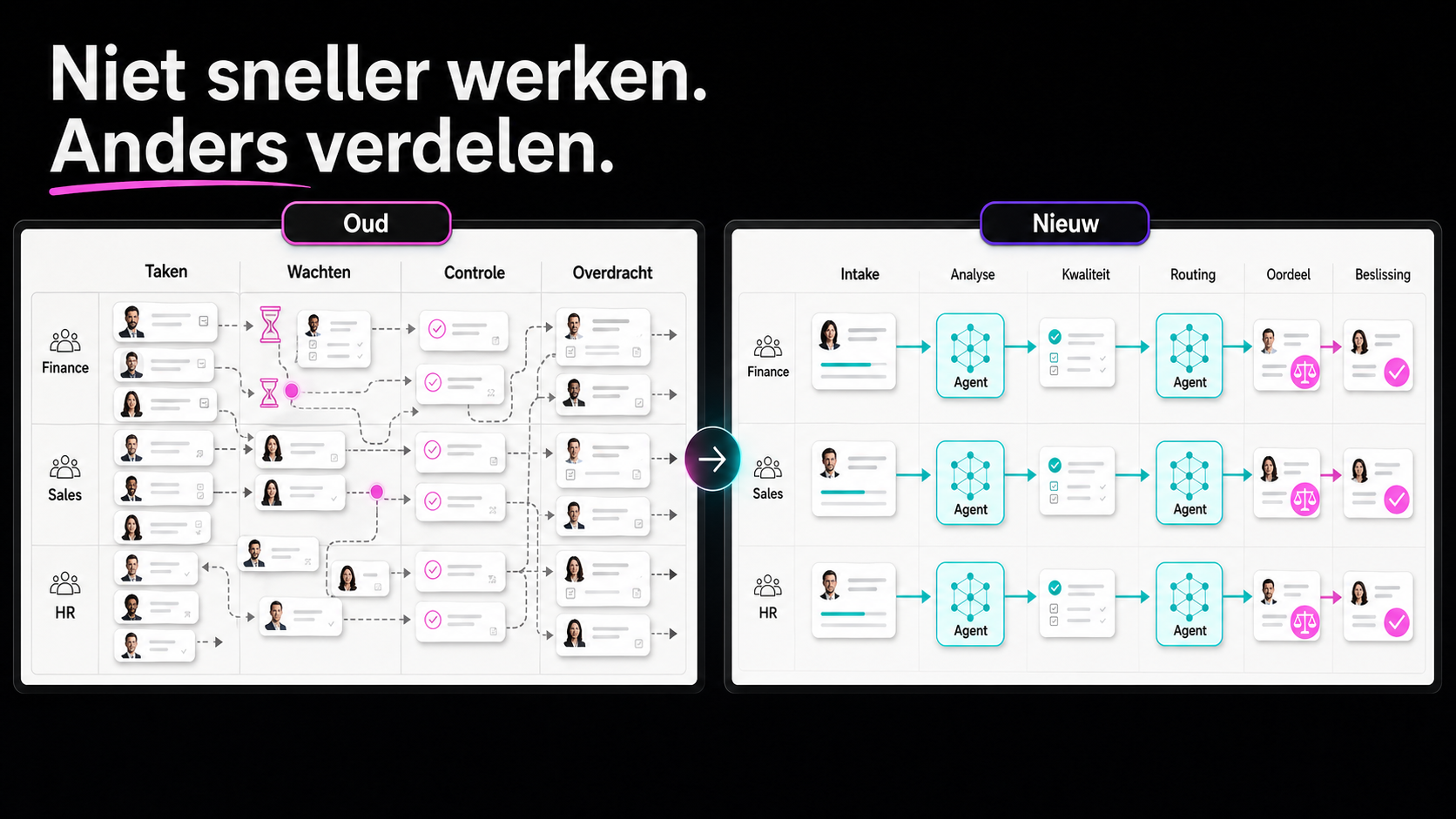
AI is everywhere. But most organisations are not moving yet.
The real AI challenge is not knowing what is possible, but getting an organisation to move before it feels enough pressure to do so.
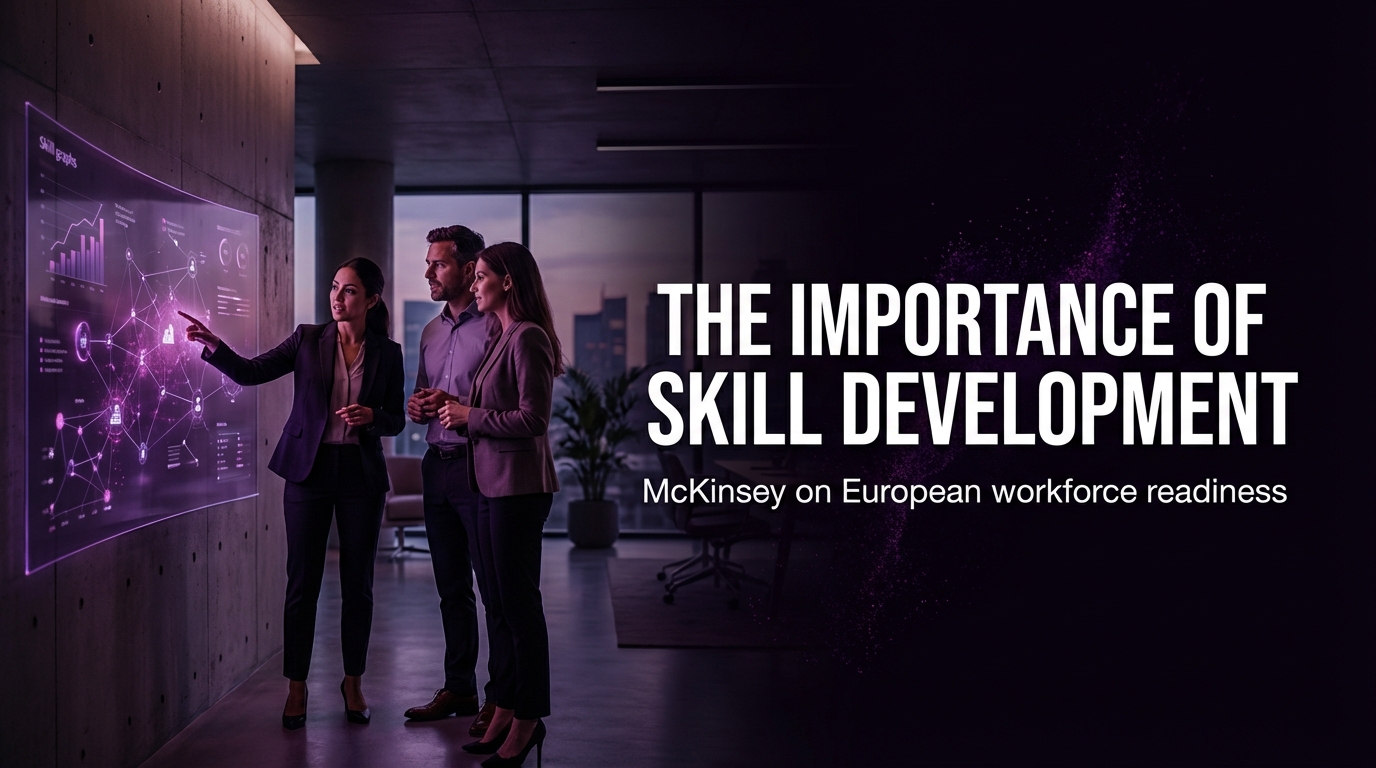
Ninety per cent say it is urgent. Five per cent are ready. The rest have a problem.
McKinsey measures a striking gap in European organisations: nearly every executive considers skills development urgent, but only a fraction has a concrete plan. What is missing is not awareness, but ownership.

More AI budget solves nothing if your IT architecture is the problem
McKinsey published a study in March 2026 that, on the surface, is about budget allocation. But anyone who reads past the figures encounters a more uncomfortable message: most organisations spend their technology budgets in ways that structurally undermine AI adoption.

The AI stress paradox: why ‘time savings’ drain us mentally and how we build a protective layer
AI was supposed to make our work easier. Yet by the end of the day we are more exhausted than ever. The repetitive filler tasks disappear, what remains is cognitive top sport. This is the quiet danger of a new kind of working day, and how to build a protective layer around it.
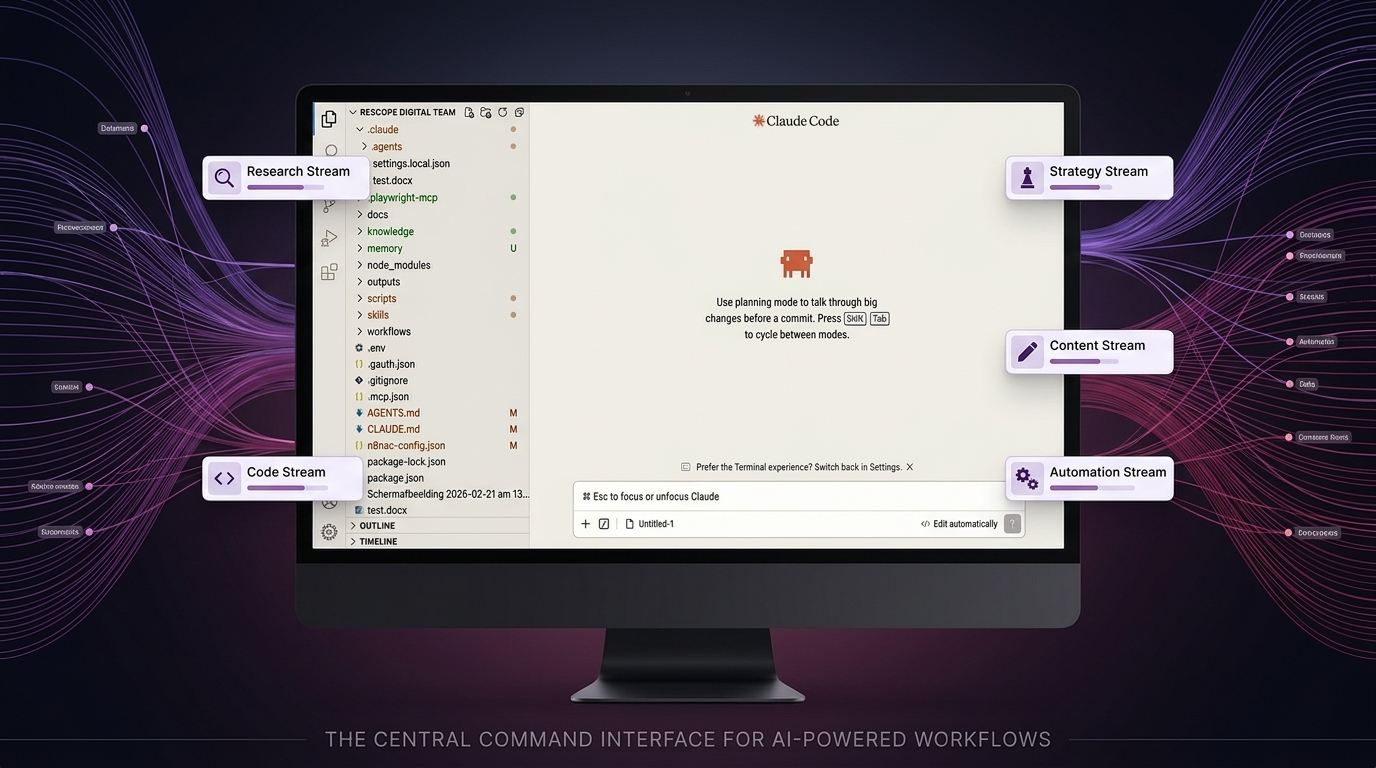
What makes an AI agent truly intelligent
When you give an AI agent a complex assignment, you see the result. What you do not see is everything in between: an agent that splits itself up, manages its own memory and decides for itself when it is done. That is not magic. It is design.
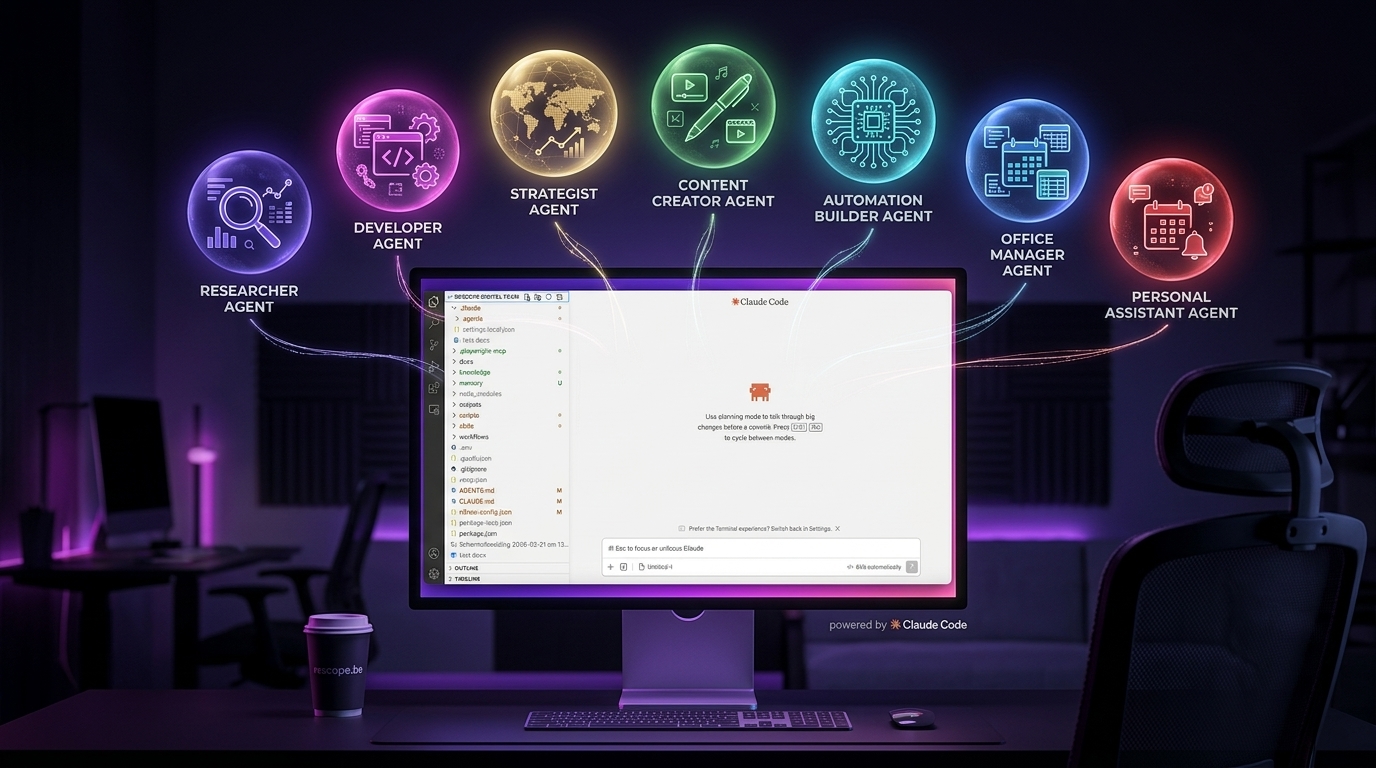
Ten weeks with Claude Code: what I learnt when you put AI to real work
I gradually built a complete digital team. Not a metaphor — literally a set of AI colleagues with their own roles, their own knowledge, their own responsibilities. That is the difference ten weeks of Claude Code makes: from user of platforms to owner of systems.

Your chatbot strategy is already outdated: why 2026 is the year of agentic AI
At the GTC conference, NVIDIA CEO Jensen Huang posed an uncomfortable question to business leaders: "What is your agentic strategy?" The answer determines who leads in the coming years — and who falls behind.

A Turing Award winner puts $1 billion behind the idea that current AI is not enough
Yann LeCun leaves Meta and founds AMI Labs in Paris with $1.03 billion in seed funding. His thesis: the language models everyone builds on are fundamentally limited. What does that mean for organisations working with AI today?

AI agents: hype or the future of business?
AI agents promise to revolutionize how businesses operate. What makes them so powerful, and how can companies effectively implement this technology?

The healthcare sector is on the verge of an AI transformation
The healthcare sector is on the verge of a profound transformation driven by the power of AI. It's about a cultural mindset shift within healthcare institutions.

Why deploy junior AI champions as mentors for colleagues?
Deploying junior AI champions as mentors can bring fresh dynamics to organizations. What are the benefits and how do you implement this strategy?

How generative AI transforms the role of middle managers
Generative AI can automate routine tasks and gives middle managers more time for strategic and creative tasks. How do you approach this?

AI and sustainability: the role of MLOps
The European AI revolution also brings sustainability challenges. How can MLOps help deploy AI sustainably?

Why AI adoption starts with a well-informed CEO
CEO involvement is essential for successful AI adoption. Why is the CEO’s role crucial and how can leaders prepare?